Yachts
The Yachts
The yacht shapes your week as much as the route: how much space you have, how private your cabin is, how many people share a bathroom and where you can sit out of the sun. Here is what to look for.
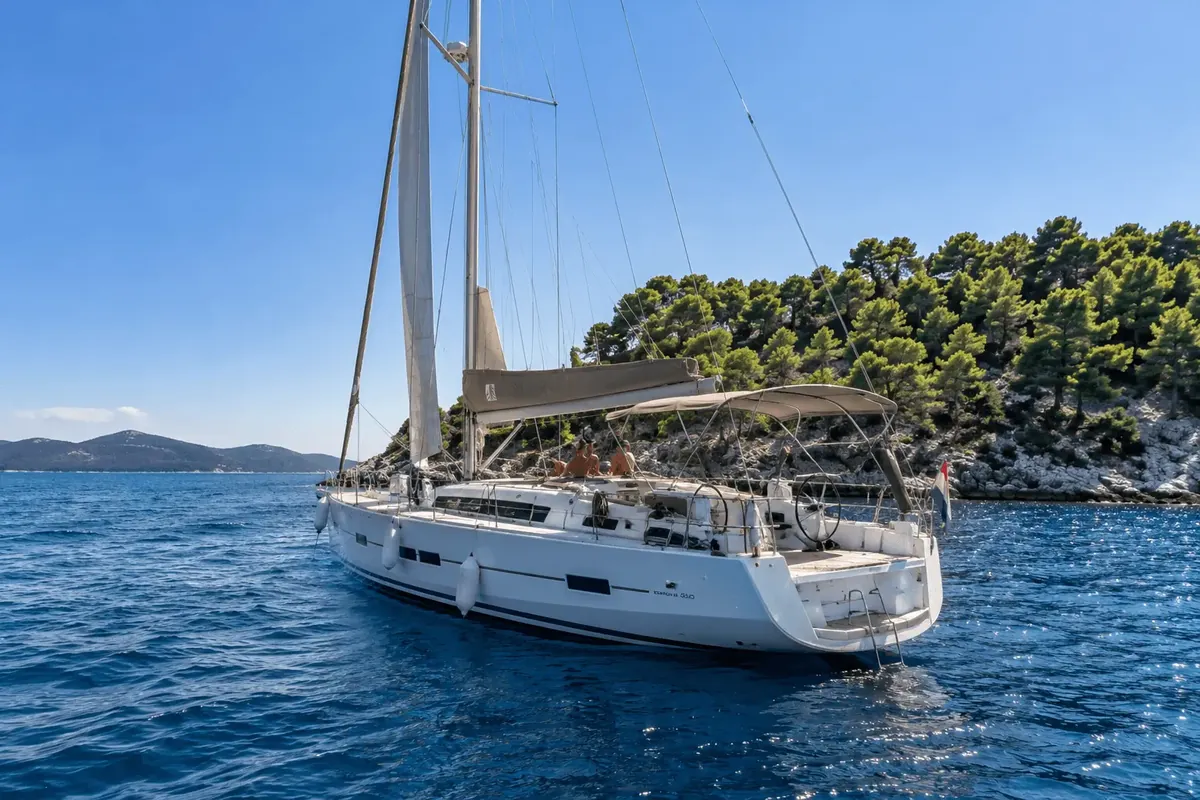
On board a sailing yacht
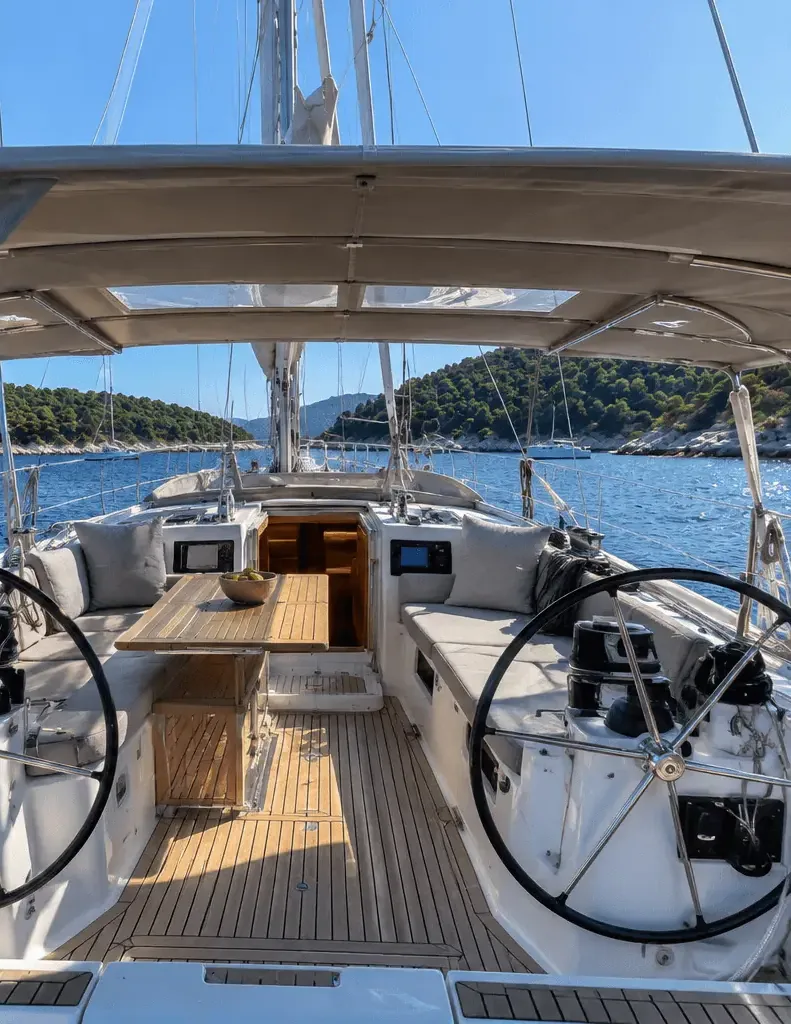
Layouts differ from yacht to yacht, but most sailing weeks share the same kind of space: a saloon and galley, double cabins, compact bathrooms and an open cockpit where most of the day is spent. Ask us for the exact layout of the yacht offered for your dates.
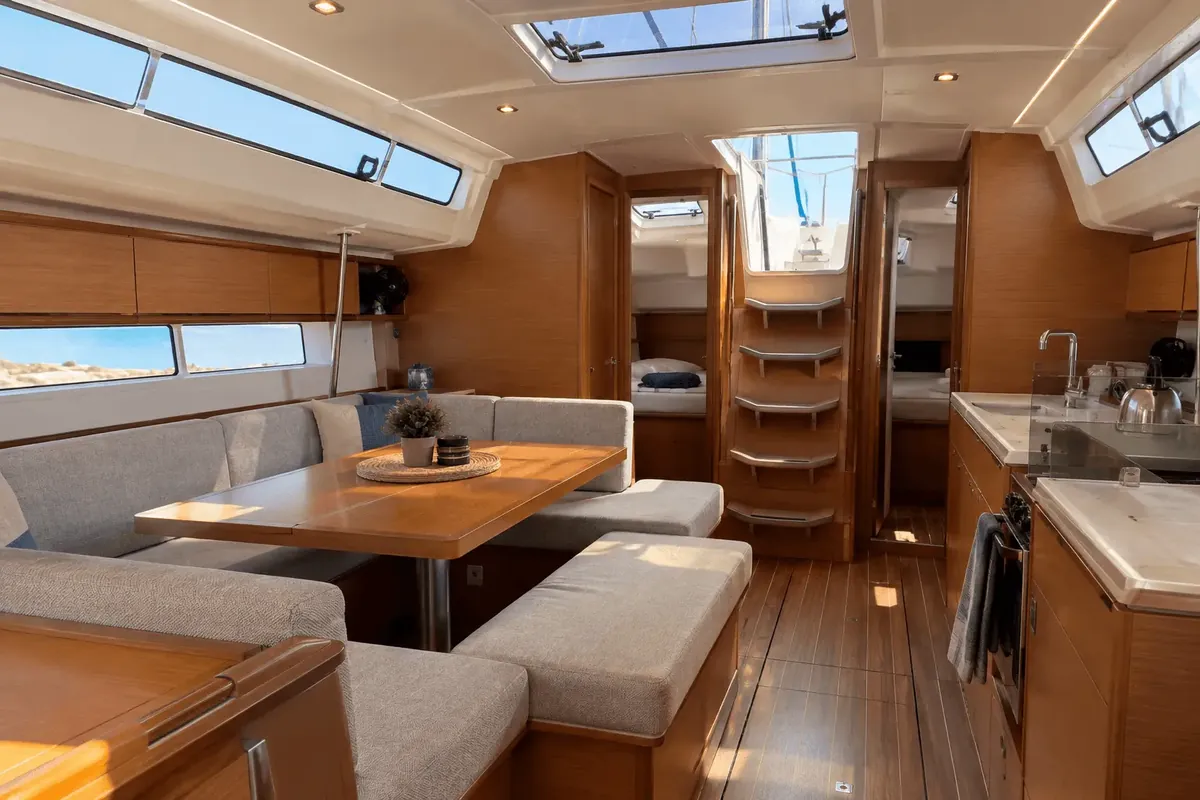
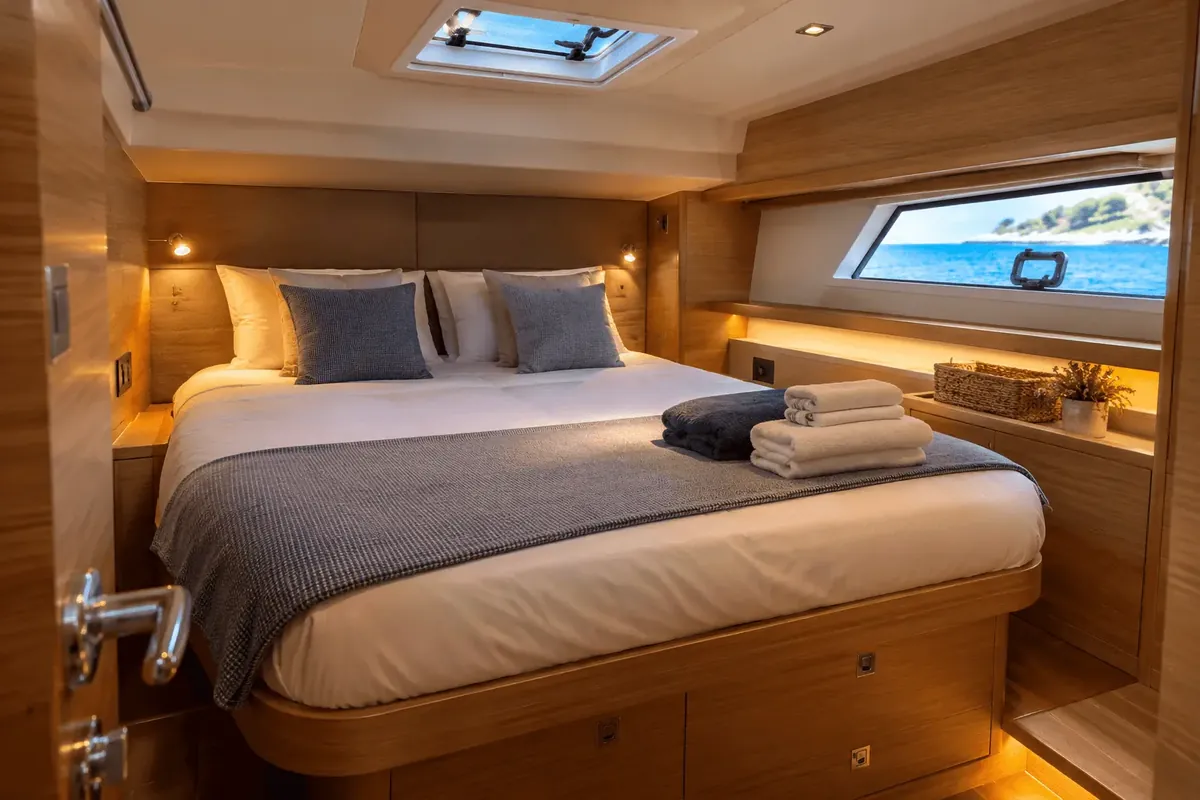
Layout and cabins
Most cruising yachts follow a similar plan. The saloon and galley sit in the middle, with cabins forward and aft.
- Double cabins usually have one large berth. Aft cabins on a monohull sit under the cockpit, so headroom can be low over part of the bed.
- Forward cabins are often V-shaped and narrow towards the bow, and you feel more motion there at sea.
- Bunk cabins, where fitted, are smaller and suit children or friends happy to share.
- Saloon berths convert from seating and offer little privacy.
Cabins have small lockers, shelves and hooks rather than wardrobes. For more detail, read cabins, bathrooms and space on board.
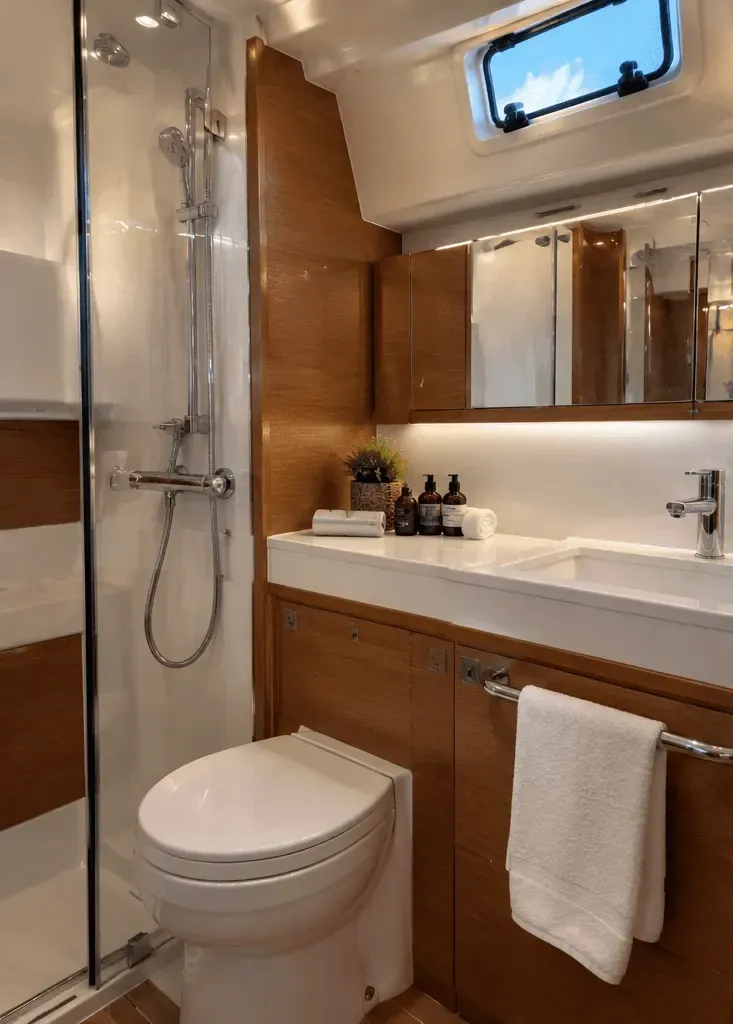
Bathrooms on board
A yacht's bathroom is called the heads. It is compact, and the shower is often a handheld head in the same space as the toilet. Marine toilets block easily, so only put down them what your skipper says is allowed.
Fresh water comes from tanks that are refilled in marinas. Short showers keep it lasting, and many guests shower in marina facilities when they can. See water, power and Wi-Fi on a yacht.
Shade, deck space and storage
The Croatian summer sun is strong. A bimini (a fabric canopy over the cockpit) gives the main patch of shade, and the foredeck is where people sunbathe. Check how much covered outdoor space a yacht has if you are sensitive to heat.
Storage is tight. Bring a soft, foldable bag that can be stowed flat; rigid suitcases are difficult to fit anywhere. Fridge space is also limited, which matters if you plan to keep drinks and food on board.
Monohull or catamaran
A monohull has a single hull and leans (heels) when sailing. Many people enjoy the feel of it, and monohulls are usually cheaper to charter and berth. The interior is narrower and you go down steps into the saloon.
A catamaran has two hulls, sails flat and rolls less at anchor. It has more deck space, more shade and a saloon on the same level as the cockpit, and cabins are often spread across both hulls with a bathroom close by. It costs more to charter and to moor, because marinas charge more for its width.
Our guide to catamaran vs monohull compares them in detail.
Mobility and special needs
If you have limited mobility or specific needs, ask before booking: companionway steps, narrow side decks and boarding over a passerelle can be difficult. See accessibility on sailing yachts.
Common questions
Will I share a bathroom?
It depends on the yacht and how many people are on board. Ask us for the cabin and bathroom layout of the yacht offered for your dates.
Is there air conditioning?
Some yachts have it, but it usually only runs on shore power or a generator. Ask us whether the yacht offered for your dates has it.
Can I choose a specific yacht?
Tell us your preference in the enquiry form, and we will tell you which yachts are available for your dates.
Keep reading
Tell us your dates, your group size and the islands you would like to see, and we will reply with suitable options and a written quote.