Safety
Safety on Board
Sailing in Croatia in summer is generally calm and settled, and a qualified skipper is in charge of every yacht. Safety at sea still depends on the yacht, the weather, the crew and the choices everyone makes on board, so here is how it works and what we ask of you.
Before departure
Please tell us about any medical condition, allergy, mobility need or concern that could affect you on board. It stays between you, us and your skipper.
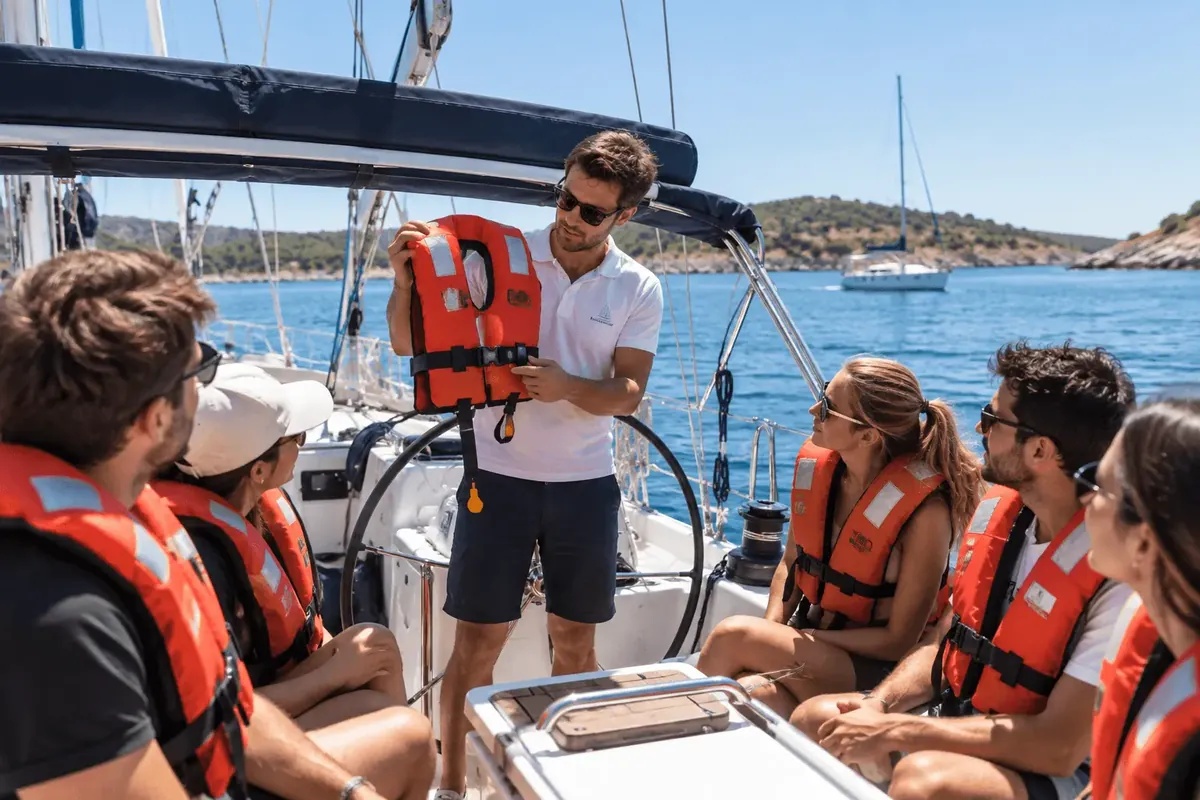
On the first day, your skipper gives a safety briefing before the yacht leaves the marina. It covers where the safety equipment is kept, how to move around the deck, how to use the toilets and seacocks, and what to do if someone falls overboard or there is an emergency. Ask if anything is unclear.
Equipment and yacht checks
If you need a particular lifejacket size, or are bringing a child, let us know in advance.
Weather and route decisions
Your skipper checks the forecast every day and decides where the yacht goes and when. Plans can change at short notice. Strong winds such as the bura and jugo can make a crossing unsafe, so the skipper may stay in harbour or take a sheltered route. Those decisions are final.
Our guides to Croatian winds and weather and route changes explain how this works in practice.
Guest conduct
Everyone on board shares responsibility for safety. We ask all guests to:
- Follow the skipper's instructions at all times, especially when mooring, anchoring or under sail.
- Wear a lifejacket when asked, and use equipment as shown in the briefing.
- Check with the skipper before swimming, and never swim while the engine is running.
- Drink responsibly. Alcohol and moving yachts, ladders and deep water do not mix.
- Wear shoes on the quay and hold on when moving around the deck.
Staying safe and well on board
Our safety guides cover the everyday things that make the biggest difference:
- Swimming safely from a yacht: ladders, currents, passing boats and swimming at anchor.
- Alcohol and safety on board: how to enjoy a drink without putting yourself or others at risk.
- Sun and heat at sea: staying cool, hydrated and protected from strong summer sun.
- Protecting seagrass when anchoring: why anchoring spots matter for the Adriatic.
- Accessibility on sailing yachts: what to consider if you have mobility or health needs.
Insurance and emergencies
We strongly recommend personal travel insurance that covers sailing, medical treatment abroad, repatriation and cancellation. Check that the policy does not exclude activities on a yacht. Our guide to travel insurance for sailing trips explains what to look for.
If you need help yourself, call 112, the EU emergency number, which works across Croatia on any phone. For emergencies at sea, Croatia's maritime search and rescue service can also be reached on 195.
Common questions
Is sailing in Croatia safe?
Summer conditions in Croatia are usually settled, and a qualified skipper is in charge of every yacht. Following the skipper's briefing and instructions is the most important thing you can do.
Do I have to be able to swim?
Being able to swim makes the week more enjoyable, but tell us in advance if you cannot. Your skipper will plan swims and safety around it.
Safety guides
Keep reading
Read the booking terms, then send us any safety questions before you reserve.