Destination guide: central Dalmatian islands
Sailing in Brač
Brač is the largest island in Dalmatia and the one you see first from Split. It is an island of white limestone: quarried for Diocletian's Palace, piled into dry-stone walls across its hills, and rising to the highest peak on any Adriatic island, above the famous beach at Bol.
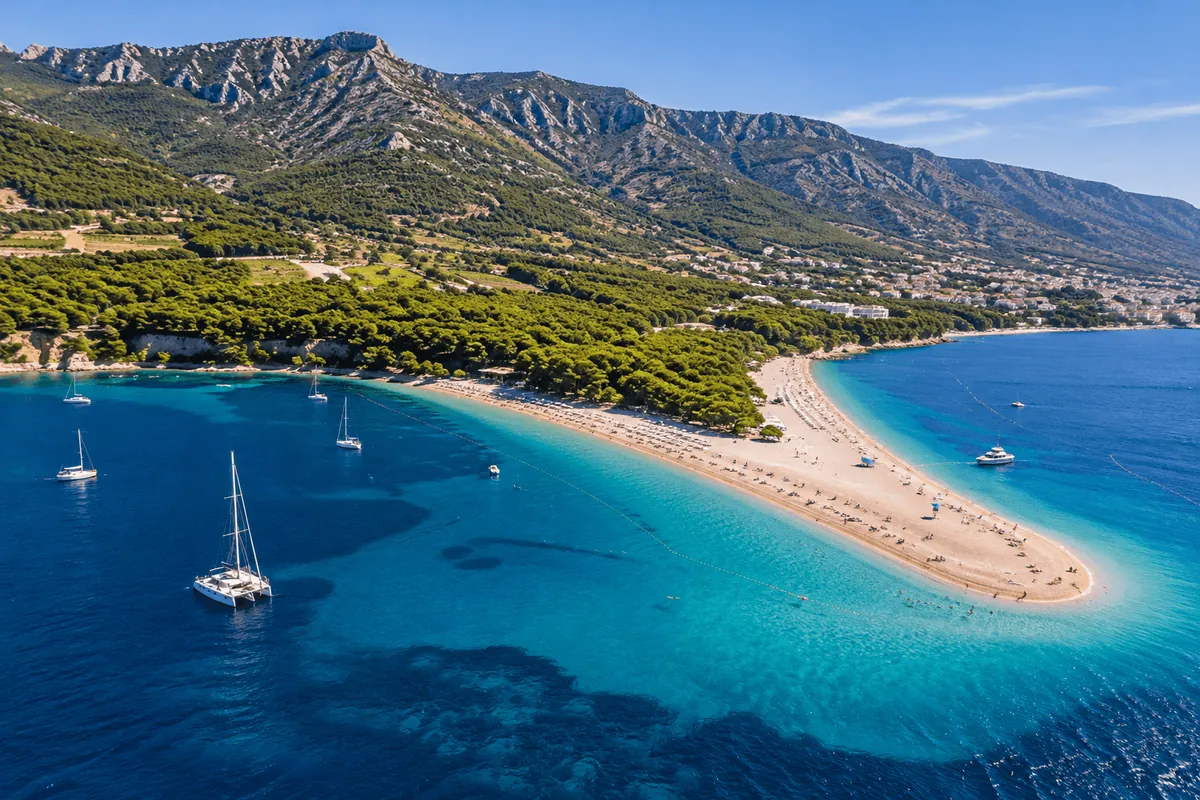
Arriving by sea
Brač looks different from every side. The north coast, facing Split, is gentle, with fishing villages such as Supetar, Postira and Pučišća set in shallow bays. The south coast is steep and dramatic: the bare slopes of Vidova Gora drop almost straight to the sea, with Bol and its long spit of beach at their foot. On the west end, Milna sits at the back of a deep, winding inlet that has sheltered boats for centuries.
The channel between Brač and Hvar is known for its reliable afternoon breeze in summer, which is why Bol is a windsurfing centre. It makes for good sailing, and a lively sea by late afternoon.
A short history
People have lived on Brač since prehistory. Škrip, in the hills above the north coast, is the island's oldest settlement, with traces of Illyrian walls and Roman remains, and it now houses a small island museum.
The Romans quarried Brač stone for Diocletian's Palace in Split, and the island has been cutting and carving it ever since. Pučišća, with quarries above the town, is home to a long-established stonemasonry school, and the white stone shows up in buildings all along the coast. On the south coast, the Blaca hermitage, founded in the 16th century, clings to a cliff above a remote bay.
A few hours ashore
What you can do depends on where you land:
- Bol: walk the shaded promenade west of town to Zlatni Rat, the pebble spit that shifts its tip with the wind and currents. In town, the Dominican monastery stands on a headland to the east.
- Vidova Gora: at 778 metres, the highest point on the Adriatic islands. The hike up from Bol is steep and long, so start early with plenty of water, or take a taxi up for the view across Hvar and Vis.
- Milna: a quiet harbour town with a baroque church, stone houses around the inlet and a relaxed waterfront for an evening walk.
- Supetar: the busy ferry town, with a long promenade and a seaside cemetery known for its sculpted tombs.
- Pučišća: white stone houses around a long bay, and a chance to see stonemasons at work.
Swims and bays nearby
Zlatni Rat is the best-known beach on the island, and busy in summer. For quieter water, the bays near Milna, such as Lučice, have clear water and good shelter. Lovrečina on the north coast is one of the few sandy bays on the island, shallow and good for children. On the south coast, the bay below the Blaca hermitage is a calm spot to swim when the wind allows, with a steep footpath up to the hermitage itself.
Food and wine
Brač lamb, grazed on the island's herb-covered hills, is the local speciality, often roasted under a bell-shaped lid (peka). Vitalac, lamb offal wrapped and grilled on a spit, is a traditional island dish. Look out too for hrapoćuša, a dense walnut cake from the village of Dol. Brač olive oil is excellent, and the slopes above Bol produce Plavac mali red.
How yachts berth on Brač
Milna is the island's main yachting harbour, with a marina and town quay in its sheltered inlet. Bol has a small town quay, though it is exposed to the afternoon breeze in the channel. Supetar is dominated by ferries, so yachts tend to use other harbours. Around the coast, many bays have mooring buoys or space to anchor for a lunch stop or a quiet night.
Your skipper will pick the berth based on the wind and how busy the harbours are. Read more about anchoring and mooring buoys.
Practical notes
Brač is a big island and its towns are spread out, so plan on taxis or a hire scooter if you want to see more than the town you are in. Zlatni Rat and Bol are crowded in July and August; arrive in the morning for space on the beach. Cards are widely accepted in the bigger towns, but carry some cash for smaller cafés and village shops. Bring proper footwear and water if you plan to walk to Vidova Gora or Blaca, as both involve steep paths with little shade.
Responsible visiting
Summer on Brač is hot and dry, and wildfire is a real risk: never light fires or barbecues ashore, and take care with cigarettes. The sandy bays shelter Posidonia seagrass, so drop anchor on bare sand and use buoys where they exist; see our guide to protecting seagrass when anchoring. Respect the dry-stone walls and private olive groves when walking, and take rubbish back to a harbour with bins.
Questions
Can you reach Zlatni Rat from a yacht?
The water off the beach is marked off for swimmers, so the usual way in is on foot from Bol, about half an hour along the shore. Whether a yacht can stop at Bol depends on the afternoon wind in the channel.
How hard is the walk up Vidova Gora?
It is a steep, exposed climb of several hours from Bol. Start early, carry plenty of water, or take a taxi up instead.
Which Brač harbour is best for yachts?
Milna is the most sheltered and best equipped. Other harbours and bays suit different winds, and your skipper will choose on the day.
Other destinations
Plan your visit
Tell us your dates, your group size and the islands you would like to see, and we will reply with suitable options and a written quote.