Destination guide: southern Dalmatia
Sailing in Dubrovnik
Dubrovnik is the walled city at the southern end of the Croatian coast, for centuries the seat of an independent maritime republic. Seen from the sea, its ring of walls and towers is one of the great sights of the Adriatic, and the islands just offshore offer quiet swims a short sail from the crowds.
Arriving by sea
Approaching from the west, you pass the Elaphiti islands before the coast steepens and the city appears below the bare slope of Mount Srđ. The walls rise straight from the rocks, with the round Minčeta tower at the top and the fortress of Lovrijenac on its own crag outside the west gate. The wooded island of Lokrum lies just off the old town.
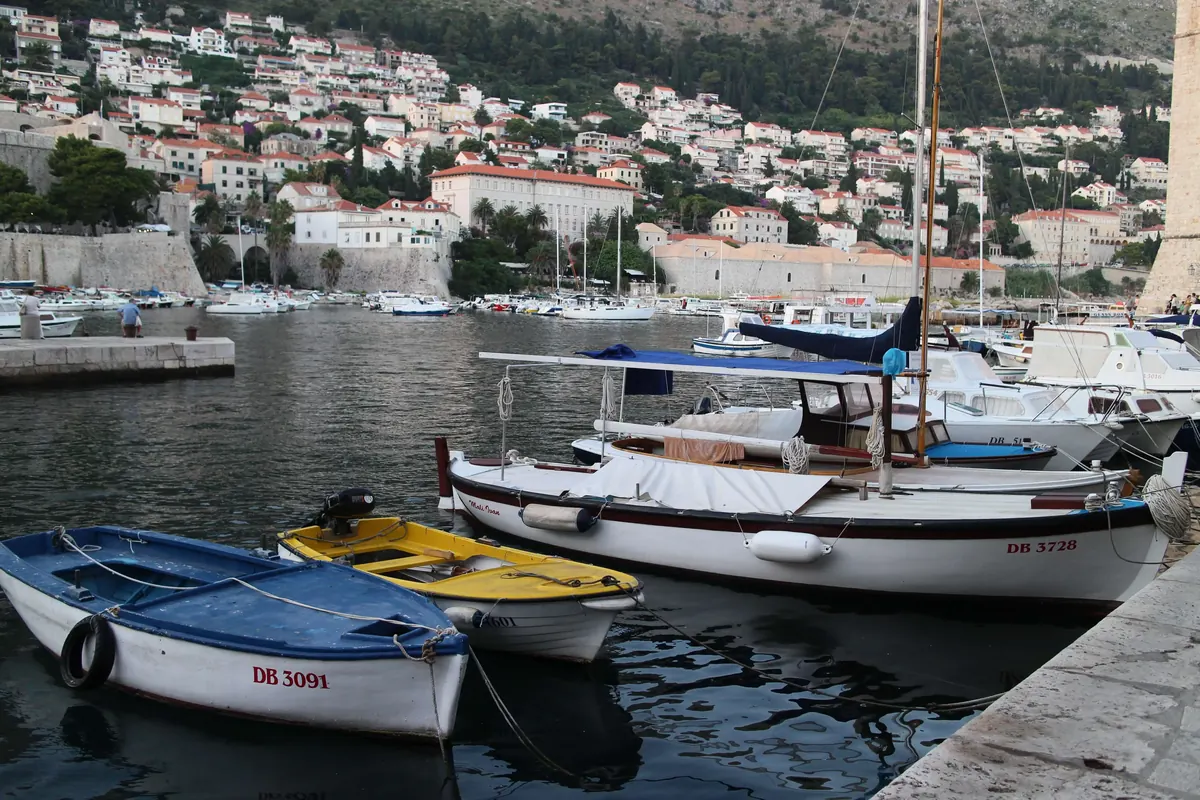
Yachts do not usually stop under the walls. The old harbour on the eastern side of the old town is used by local excursion boats and taxi boats, so most visiting yachts arrive at Gruž, the city's main port, or continue past it up the Rijeka Dubrovačka, a narrow inlet fed by a river.
A short history
For centuries Dubrovnik, then known as Ragusa, was an independent republic that lived by trade and diplomacy, with a merchant fleet that sailed across the Mediterranean. It kept its independence until 1808, when it was abolished under Napoleon.
A great earthquake in 1667 destroyed much of the city, and the rebuilding gave the old town its unified baroque look, including the polished limestone of the Stradun, its main street. The city was shelled during the siege of 1991 and 1992 and carefully restored afterwards. The old city has been a UNESCO World Heritage Site since 1979.
A few hours ashore
- Walk the city walls, a circuit of almost two kilometres with views over the rooftops and out to sea. Go as early as you can, before the heat and the crowds.
- The Stradun, running from the Pile Gate to the old harbour, with the Rector's Palace and the Sponza Palace at its eastern end.
- The Franciscan monastery near the Pile Gate, whose pharmacy has been running since the 14th century.
- Lovrijenac fortress, outside the walls, with views back across the city.
- The cable car up Mount Srđ, for a view over the whole old town, Lokrum and the islands.
In July and August the Dubrovnik Summer Festival brings theatre and music to the city's squares, forts and courtyards.
Swims and islands nearby
Lokrum, a few minutes from the old harbour by local boat, has pine woods, a botanical garden, a ruined Benedictine monastery, rocky swimming spots and a small salt-water lake. Peacocks roam the island, and visitors may not stay overnight.
The Elaphiti islands to the north-west are quieter. Koločep is the closest and smallest, Lopud has one of the few sandy beaches in the area at Šunj bay, and Šipan, the largest, has two villages at either end of a fertile valley. South-east of the city, Cavtat is a small, attractive harbour town with pine-shaded paths around its peninsula.
Food and wine
Dubrovnik's seafood is excellent, especially oysters and mussels from Ston, on the Pelješac peninsula north-west of the city, where they have been farmed for centuries. Black risotto made with cuttlefish ink is a staple, and rozata, a caramel custard flavoured with local rose liqueur, is the classic dessert. For wine, try Malvasija dubrovačka, a white from the Konavle valley south of the city, or the powerful Plavac mali reds from Dingač on Pelješac.
How yachts berth near Dubrovnik
The ACI marina lies a few kilometres up the Rijeka Dubrovačka inlet, a sheltered spot with a regular bus into the city. Gruž port is mainly used by ferries and cruise ships, though there are berths for yachts along parts of its quay. Cavtat has a town quay, and the Elaphiti islands have bays with anchorages and mooring buoys, such as the harbours on Šipan and Lopud.
Whether a week includes Dubrovnik depends on the route, so ask us when you enquire. Stops can change with the weather. For how marinas and quays work, see our guide to marinas and town quays.
Practical notes
Dubrovnik is one of the busiest places on the coast in summer, especially when several cruise ships are in port at once. Visit the old town early in the morning or in the evening, and wear shoes with grip: the stone streets are polished smooth and there are many steps.
Buses run from Gruž and the marina to the Pile Gate. The airport at Čilipi lies south-east of the city, on the coast road past Cavtat, so allow time for summer traffic. Cards are widely accepted, and the walls, cable car and Lokrum boats sell tickets separately; check prices and times on official sites before you go.
Responsible visiting
The old town is home to a dwindling number of residents, so keep noise down in its lanes at night and dress respectfully away from the beach. Lokrum is a protected reserve: follow its rules and take everything you bring back with you. When anchoring around the Elaphiti islands, use buoys where provided and drop anchor on sand, clear of the Posidonia seagrass; our guide to protecting seagrass when anchoring explains how.
Questions
Can yachts moor in Dubrovnik's old harbour?
Not usually. The old harbour is used by local excursion boats and taxi boats, and visiting yachts generally use Gruž port or the ACI marina up the Rijeka Dubrovačka.
How do you get from Dubrovnik Airport to the city?
The airport is at Čilipi, south-east of the city past Cavtat, and connected by airport bus and taxi. Check current options with the airport before you travel.
Can you stay overnight on Lokrum?
No. Lokrum is a protected reserve, and visitors must leave on the last boat of the day.
Other destinations
Plan your visit
Tell us your dates, your group size and the islands you would like to see, and we will reply with suitable options and a written quote.